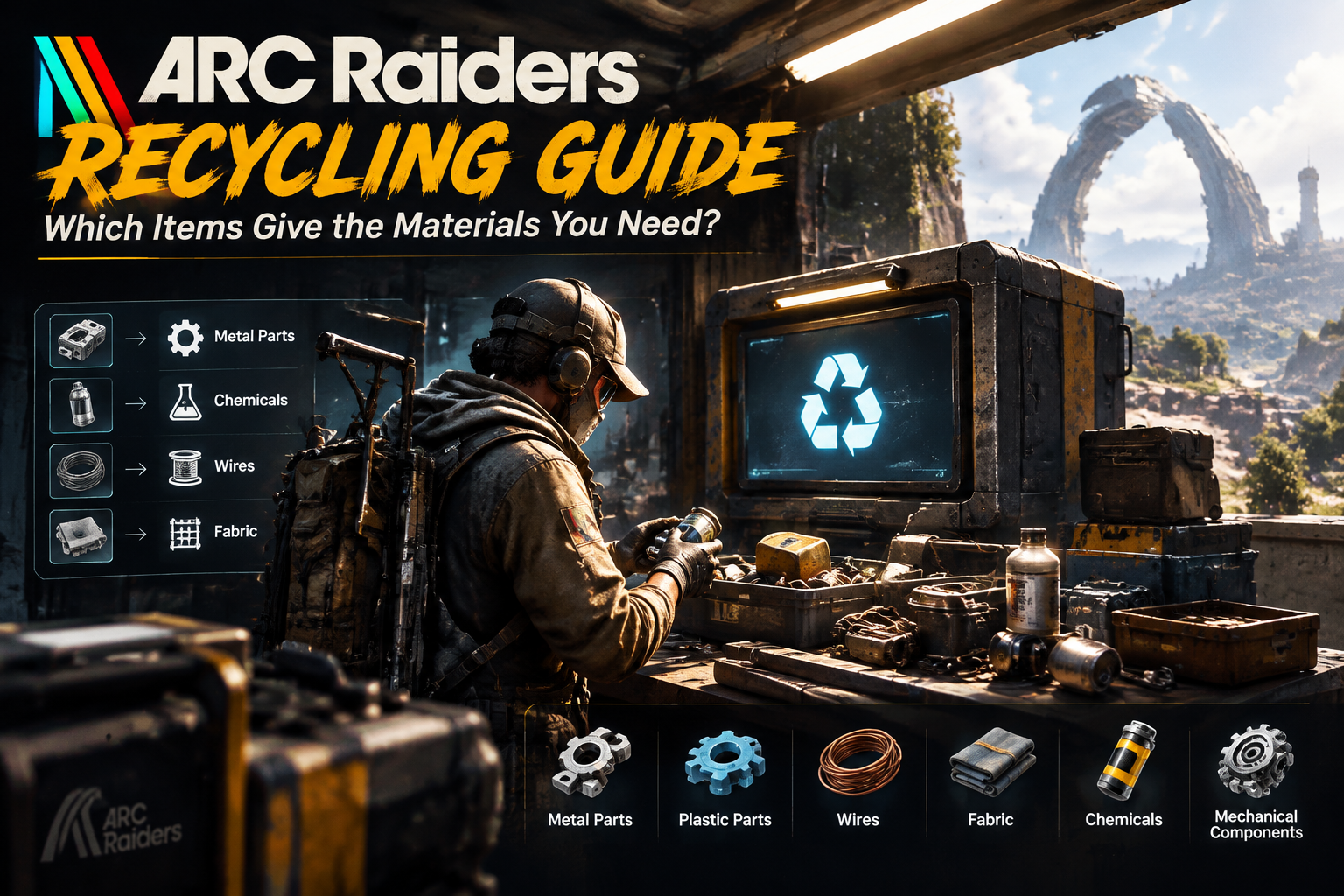
Recycling in ARC Raiders is one of the most useful ways to turn unwanted loot into crafting materials, Workshop resources, and components for future upgrades. Instead of judging an item only by its sell value, you should first check what it can become and whether those materials are currently needed. This is especially useful when managing ARC Raiders Coins, since recycling can reduce the amount of currency you need to spend on materials or trader purchases.
Check What You Need Before Recycling Anything
The safest approach is to start from the item or crafting requirement rather than from the loot in your stash. If you are missing a material for a recipe, the crafting interface can show an Acquire Resources option that identifies available ways to obtain it, including recycling suitable items or buying from Celeste when that option is available. This makes it much easier to find the correct source without manually opening every inventory category.
Before breaking down surplus loot, use this quick decision check:
| Situation | Best approach |
| A crafting recipe needs the material now | Recycle an appropriate spare item |
| You have several copies of the same low-value loot | Keep the amount needed for known recipes, then recycle extras |
| The item is required for a quest or project | Keep it |
| The item has strong direct sale value | Compare its sale value with its recycling value |
| You are unsure about an unfamiliar item | Store it until you confirm its purpose |
| You need materials immediately during a raid | Use Field Recycling only when necessary |
This prevents a common mistake: recycling something useful simply because it looks like ordinary junk.
Use Acquire Resources to Find the Right Recycling Source
Acquire Resources is particularly helpful when you know the material you need but do not know which stored items can provide it. When a required resource is missing, the system can show available acquisition methods instead of forcing you to search through the entire stash.
A practical crafting routine is simple:
- Open the crafting recipe you want to complete.
- Check which material is missing.
- Use Acquire Resources to see the available sources.
- Recycle a suitable spare item when recycling is offered.
- Return to the recipe and finish the craft.
This approach is safer than mass-recycling after every extraction because your stash remains organized around actual crafting needs.
Which Loot Is Usually Worth Recycling?
The best recycling targets are items that convert into materials you regularly consume. Common examples include components that break down into Plastic Parts, Metal Parts, Wires, Fabric, Rubber Parts, Chemicals, Mechanical Components, or other crafting resources. Database references currently list many loot items with defined recycling conversions, but the exact value of a conversion should always be checked against the current in-game interface before you commit an item.
Some useful examples include:
- Antiseptic can be converted into Chemicals
- ARC Performance Steel can provide Metal Parts
- ARC Synthetic Resin can provide Plastic Parts
- ARC Thermo Lining can provide Fabric
- Power Cable can provide Wires
- Alarm Clock can provide Processor and Plastic Parts
- Advanced Mechanical Components can be broken down into lower-level mechanical resources
The important point is not to memorize every conversion. Learn which materials your current Workshop projects and crafting recipes consume, then recycle toward those requirements.
Do Not Treat Field Recycling Like Stash Recycling
ARC Raiders also allows Field Recycling, which is useful when you need to free inventory space or turn an unwanted item into materials while still Topside. The Field Crafting interface provides access to this function directly from your inventory.
However, field recycling should be treated as an emergency or convenience option rather than your default stash-management method. Recycling during a raid can return fewer or different materials than processing the same item back at Speranza, so valuable items should generally be kept until you can make the full conversion safely.
Good field-recycling candidates
- Duplicate low-value loot
- Items blocking valuable inventory space
- Materials you immediately need for a field craft
- Items with no known quest or project purpose
Items to think twice about
- Quest-related objects
- Rare components
- Unfamiliar advanced materials
- Items needed for Workshop upgrades
- Items you only have one copy of
Keep Advanced Materials Until You Know Their Role
Not every refined component should be recycled immediately. Some materials are already several steps into a crafting chain, meaning breaking them down can give you lower-tier resources while removing an item that may be required directly by another recipe.
This is particularly relevant after the Frozen Trail update added new crafting demands around the Outpost, Research Bench, furniture, and new gameplay items. Celeste’s trading options were also updated with materials connected to the new content, so the value of keeping certain resources can change as your progression advances.
A useful rule is to keep rare or unfamiliar components until you have checked your current Workshop, Projects, and crafting requirements. Recycle common duplicates first.
Pay Attention to New Amplified Weapon Materials
Frozen Trail also changed how some weapon-related materials function. The Anvil Splitter is no longer used as a normal weapon mod and instead became an improved upgrade option for the Amplified Anvil. Existing Anvil Splitters can still be sold or recycled into Amplified Fragments used for repairing Amplified Weapons.
This is a good example of why old recycling habits can become outdated after a major update. If you return to ARC Raiders after a patch, check unfamiliar weapon components before dumping them into the recycling menu.
When Selling Is Better Than Recycling
Recycling is not automatically better than selling. Some items have a useful direct sale value, while their recycled materials may not be worth enough to justify losing the item. The right choice depends on your current material shortage, crafting plans, and available currency.
Use this priority when deciding what to do with surplus loot:
Need the material now: Recycle it.
Need currency for a purchase: Sell it.
Need it for a known recipe or project: Keep it.
Unsure what it does: Store it until you can confirm its purpose.
Have many duplicates: Keep a reasonable reserve and recycle the excess.
This system also makes ARC Raiders Coins easier to manage because you are not spending currency on materials that could have been recovered from unwanted loot.
Build a Recycling Routine After Every Raid
Do not wait until your stash is full before sorting everything. After returning to Speranza, first remove quest and project items from consideration, then check current crafting requirements, then recycle common surplus loot. Sell items that have a better immediate economic use, and leave uncertain materials untouched.
As you plan future crafting, check your ARC Raiders BluePrints alongside Workshop and Project requirements so you know which components are worth keeping instead of recycling. This is especially useful when preparing for a larger crafting session, because a material that looks unnecessary today may be part of the next weapon or equipment requirement.
For the most efficient routine, make Acquire Resources your first check whenever a recipe is missing a component, recycle common duplicates toward that requirement, and only sell the remaining surplus. That gives you a practical balance between material stockpiling, stash space, and ARC Raiders Coins without destroying resources you may need later.